- Home
- About Us
- Our Products
- Our Brands
- JAECOO
- OMODA
- KAIYI
- SRM
- Blogs
- Connect With Us
- Dealer Network
- Book a Service


The growing urgency of climate change together with the global requirement, automobile manufacturers are increasingly transition from gasoline-powered vehicles to Electric Vehicles as a solution to meet the global demand. This integrated approach bridges EV adoption reinforcing its contribution to environmental sustainability and cleaner mobility solutions. One of the primary arguments against petrol cars is the constant emission of GHGs during their operation, so, is an electric car truly more sustainable than a petrol car?, These are the very questions raised during our interview with Ms Roshani Dharmaratne, Executive Director, Hayleys Mobility.
Q: Sustainability is often seen as a cost. How can it be balanced with economic viability in the mobility sector?
Not too long ago, sustainability was often viewed as an added expense, a “nice to have” rather than a necessity. Today, that mindset has shifted dramatically. Sustainable practices are increasingly recognised as smart, long-term business decisions rather than compromises.
This shift is particularly evident in the corporate world, where sustainability has moved from being optional to essential. Growing concerns around climate change, community impact and carbon footprints have made action unavoidable. While pollution arises from many sources, including industry, households, and commercial activity, vehicles remain one of the most significant contributors. As a result, mobility presents one of the clearest and most immediate opportunities to create meaningful change.
In the past, sustainability efforts largely focused on initiatives such as waste segregation or reducing electricity consumption. While important, their impact was not always immediately visible. Mobility, however, delivers quicker and more tangible results. By transitioning to New Energy Vehicles (NEVs), both individuals and organisations can significantly reduce emissions while also lowering operating costs.
From a financial perspective, the case for EVs is compelling. The cost per kilometre of running an EV is roughly one-third that of a conventional internal combustion engine (ICE) vehicle. Maintenance costs are also considerably lower, as EVs do not require oil changes and have far fewer moving parts. These savings make electric mobility not only environmentally responsible, but economically attractive as well.
That said, true sustainability does not stop at the vehicle itself. If electricity is generated using coal or other fossil fuels, the overall environmental benefit is reduced. This is where renewable energy sources such as hydro, solar, wind and biomass become critical. For example, when households or organisations install solar systems and charge their electric vehicles using clean energy, they create a genuinely green, end-to-end mobility solution, with operating costs reduced to almost zero.
Plug-in hybrid electric vehicles (PHEVs) also play an important role during this transition period. While they still use conventional fuel, their efficiency is significantly higher, often delivering more than 19–20 kilometres per litre. This results in lower fuel consumption and reduced emissions, making them a practical and sustainable interim solution.
Globally, the potential of sustainable mobility is already evident. Studies conducted in developed countries have shown that replacing older diesel buses with electric buses resulted in total benefits of USD 84,200 per bus. Each electric bus emitted 181 fewer metric tonnes of carbon dioxide than its diesel counterpart, equating to USD 40,400 in climate benefits and USD 43,800 in health savings due to reduced air pollution.
The consequences of climate change are already being felt through increasingly extreme weather events. For instance, we have experienced the severity of Cyclone Ditwah. While New Energy Vehicles (NEVs) alone will not solve climate change, they represent a crucial component of a broader solution that will also include technologies such as green hydrogen and other renewable energy innovations.
Q: The consensus on what sustainable mobility meant set us on our next task to establish the imperative for action, having said that what challenges do you face while implementing green mobility strategies and how do you overcome them?
In this context, one of the first considerations that comes to mind is the technology behind New Energy Vehicles (NEVs). Setting mobility aside for a moment, it is useful to look at other industries, such as renewable energy, to understand how rapidly technology has evolved. It is impossible to overlook the progress made globally, particularly in China. Chinese manufacturers now lead the renewable energy industry and development, dominating the production of solar panels, inverters, energy storage systems and even wind turbines. Like much of the world, we already rely heavily on Chinese technology.
This leadership extends to the automotive sector as well, where Chinese EV technology has proven to be advanced, reliable and commercially viable today. Everything has evolved significantly from where it was a decade ago, largely due to sustained investment in research and development, as well as strong access to raw materials and large-scale manufacturing capabilities. This combination has enabled robust innovation and dependable supply chains.
Policy consistency is another critical factor. Countries that have successfully transitioned to NEVs have done so with strong and stable government support. Policies were not only announced but actively implemented, monitored, kept consistent and refined over time.
In Sri Lanka, I believe we are currently working towards formulating appropriate policies. This is unavoidable, as we are one of the countries, among over 200, that have pledged, by signing the Paris Agreement, to contribute to limiting global warming. We have committed to achieving a 70 per cent renewable energy target by 2030, a milestone already achieved in 2025 and to reaching carbon neutrality by 2050. While the power sector has made encouraging progress, it is vital that other sectors, including transport, align with these national commitments.
The transformation to NEVs must also be supported by a comprehensive charging infrastructure covering the entire island. This is essential to eliminate range anxiety and build consumer confidence. Therefore, clear roadmaps and well-defined implementation plans are required, along with targeted concessions to encourage adoption. Without these, the transition will neither be sustainable nor practical, nor affordable for most income segments of the population. In the long term, clearly articulated and consistent policies are essential, regardless of changes in administration.
Q: Ambitions are set high for the mobility of the future: we need equitable, efficient, safe and green mobility. What role does data and smart technology play in improving green mobility systems?
Indeed, the ambitions for the future of mobility are set high: we need systems that are equitable, efficient, safe and green. In this context, data and smart technology sit at the very heart of effective, sustainable mobility solutions. Without intelligence embedded into both vehicles and infrastructure, green mobility cannot scale effectively or build public confidence in what it can truly achieve.
Data also plays a critical role in energy management. In the current context of our country, renewable energy generation and consumption do not always align perfectly. To reduce this mismatch, accurate data and smart systems are essential. These enable better control of imbalances, help implement corrective measures and contribute to overall system stability. While Sri Lanka is still developing these capabilities, global data and established best practices can guide local decision-making in the interim. There are numerous case studies to draw from, even if we look only at our neighbour, India.
In modern electric vehicles, a wealth of information is displayed on the vehicle dashboard, allowing users to understand performance, efficiency and energy usage in finer detail. Charging networks can also capture valuable data on usage patterns and regional demand. Even with conventional vehicles, improved data can support traffic management and road optimisation, delivering time savings for commuters, environmental benefits and reduced congestion on city streets.
Ultimately, converting vehicles is only one part of the journey. Building an intelligent, connected mobility ecosystem is an ongoing process and data is the thread that ties it all together.
Q: How practical is NEV (New Energy Vehicle) adoption in Sri Lanka?
The practicality of NEV adoption in Sri Lanka is no longer a question of if, but rather how fast.
A major turning point came on 1st February 2025, when the Sri Lankan Government lifted restrictions on vehicle imports. Since then, based on registration data from January to November, over 56,800 passenger vehicles have been registered. EVs account for approximately 10 per cent of new vehicle registrations, while PHEVs and hybrids make up a further 30 per cent. Together, this represents 40 per cent of total registrations. The remaining 60 per cent continues to comprise conventional ICE vehicles running on fossil fuels. This is a clear sign of accelerating adoption and it is genuinely encouraging. Even before strong policy pushes or national incentives, Sri Lankan vehicle owners have demonstrated that they are smart, forward-thinking and willing to embrace new technology.
If we look at international comparisons, the UK’s 2025 registration data shows that nearly 50 per cent of newly registered vehicles are NEVs. China reflects a similar trend. In contrast, other East Asian markets still average around 20 per cent, while India remains as low as 7.8 per cent. Singapore is the only market to have recorded close to a 40 per cent transition, almost in line with Sri Lanka’s figures. This clearly demonstrates how readily and confidently Sri Lankans have adopted these technologies, which is a very positive sign.
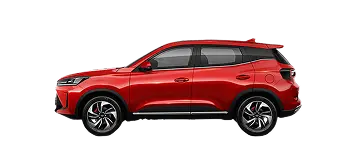
For island nations such as Sri Lanka, EVs and PHEVs are particularly practical when compared to large landmass countries. The entire country is relatively compact, the distance from Point Pedro to Dondra is only around 520 kilometres. Even a PHEV, such as the Jaecoo J7, which can deliver over 1,200 kilometres on a full charge combined with a full 60-litre fuel tank, can comfortably travel south and return without any concern. A full EV can also manage such distances with ease. Where recharging is required, a short break at a fast-charging station, typically 20 to 30 minutes, is sufficient to continue the journey.
For urban drivers, particularly those with access to home or workplace charging, NEVs make strong economic sense. Electricity costs per kilometre are significantly lower than petrol or diesel, maintenance requirements are minimal, and exposure to fuel price volatility is greatly reduced.
Q: Leadership style plays a critical role in organisational effectiveness. What leadership qualities are essential in today’s mobility sector?
Leadership in today’s mobility sector demands a genuine belief in technology, strong exposure to global trends and industry know-how and the courage to drive meaningful change, while ensuring that the transition to green mobility remains inclusive and equitable.
At an organisational level, sustainability cannot be driven by leadership alone. Employees must also feel a sense of ownership over their individual carbon footprints, including emissions generated across the supply chain. True transformation occurs when sustainability evolves into a shared organisational mindset, rather than remaining a top-down directive.
Consumers, meanwhile, are far more informed than ever before. Many conduct extensive online research prior to visiting a showroom, often arriving with a clear understanding of the model they wish to purchase. As a result, the traditional sales persuasion cycle has shortened significantly compared to the past.