- Home
- About Us
- Our Products
- Our Brands
- JAECOO
- OMODA
- KAIYI
- SRM
- Blogs
- Connect With Us
- Dealer Network
- Book a Service


Since imports opened up in 2025 after a near five-year ban, we’ve seen a host of new Chinese automakers enter our shores. Today’s contender is the Jaecoo J7 PHEV, as brought to you by Hayleys Mobility, who also represents sister brand Omoda. Jaecoo and Omoda come under the wider umbrella of Chery Automobile and are a very young duo – their formation was in 2023. Interestingly, the two brands are intended to expand Chery’s footprint outside China; you won’t find Jaecoo or Omoda cars sold in China – only their similar or related Chery counterparts. That’s the case with the J7 range as well. So let’s see how it fares in Sri Lanka.
On Sri Lankan roads, given that it’s already available in the United Kingdom, Australia, New Zealand, South Africa, Russia and a host of Southeast Asian countries too.
Exterior
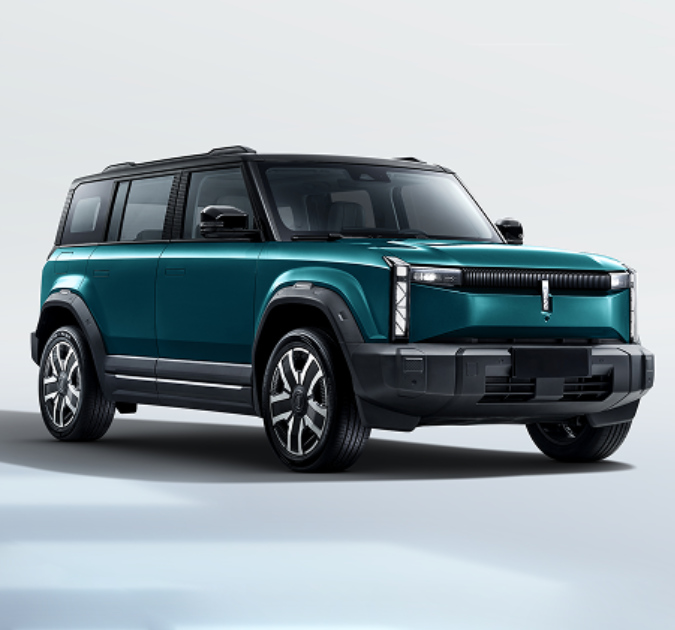
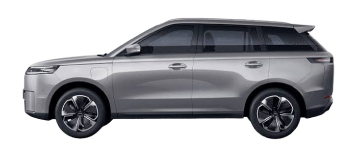
The Jaecoo J7 PHEV sits in the compact class of crossover/SUV. In terms of overall numbers, it measures long, 167 metres tall and 1.85 metres wide, meaning that parking will be pretty hassle-free. It’s also got a smart set of 19-inch aero-optimised alloy wheels and offers around 200 millimetres of ground clearance. This is useful if you tend to traverse some of our less-than-stellar roads that have ample craters and humps to offer.
You can have your J7 PHEV in a choice of Forest Green, Ocean Blue, Lunar Silver, Carbon Black and Arctic White. Our tester comes in Lunar Silver which has a beautifully multi-layered hue. As sunlight (or artificial light) hits it from various angles and intensities, the overall shade shifts between light blue to grey to even white in certain areas. Yes, it’s a bit chameleon-esque. We also had a chance to check out a Carbon Black variant at the showroom, and it looks smart as well, albeit without any colour-shifting abilities!
Regardless of colour, the J7 PHEV looks smart with its split LED headlamp with LED daytime running lamps and large grille that prominently proclaims JAECOO right at the centre. Along the sides, you’ve got those famous electric hidden door handles and a rising window line as you move from front to rear. Yes, the overall silhouette of the Jaecoo J7 looks like a popular British luxury off-roader’s product, especially the way the roofline and window lines converge, albeit not a carbon copy. The vehicle also has largely cosmetic roof rails. The rear contains LED tail lamps and a hands-free power tailgate.
Mech & Tech
Our test J7 is the PHEV or Plug-In Hybrid variant. So, it’s got a 1.5-litre turbocharged 4-cylinder engine, plus an electric motor. The engine is rated at 148 horsepower and 215 newton-metres of torque. The electric motor can provide up to 204 horsepower and 310 newton-metres of torque. If you add these together, you might think that your J7 PHEV makes 342 horsepower and 525 newton-metres of torque. However, that’s not the way such power-split hybrids work. Since the electric motor and petrol engine make their maximum power and torque figures at different RPM ranges, simple addition doesn’t work here. The agents tell me that around 276 horsepower and 380 newton-metres of torque are rather more realistic figures for combined output maximums.
Both power sources send their drive to the road via a DHT or Dedicated Hybrid Transmission that handles the task of combining the power in a smooth and efficient fashion. The vehicle is front-wheel drive in case you’re wondering. All-wheel drive is available in other markets and could possibly be ordered here as well, albeit at a higher price point. The J7 PHEV has got MacPherson Strut front suspension and multi-link rear suspension. Four-wheel, anti-lock disc brakes are standard, as is regenerative braking – a key feature in any hybrid or EV.
Driving Experience
As you open the door with the key in hand or on your person, the J7 PHEV is already prepared to set off. The vehicle automatically switches on and the driver seat has motored into the Comfort Access position. Once you close the door, it returns to your set position, or you can adjust it via the power adjustment function. Press the brake pedal and READY is displayed on the gauge cluster. Select D (or R) via the column-mounted gear shifter and away you go. I must point out that if you want to shift from D into R (or vice-versa), you’ve got to actually click the shifter twice in the necessary direction, as the first click takes you into Neutral. Hayleys tells me that the latest J7s have sorted this out.
Three driving modes are present, selected via a centre console-mounted rocker. Eco gives you maximum regeneration and subdued throttle response, encouraging very conservative driving. Normal is, well, pretty regular and there’s the more enthusiastic Sport mode. That’s because the J7 PHEV still gives you full beans if you floor it. Selecting Sport dials up throttle response and dials down traction control too. I feel, judging by how the front tyres willingly chirp and the steering wheel displays some torque steer, that you’re being lead-footed while cornering.
The J7 isn’t slow, and I feel that Hayleys is being coy by saying that the 0–100 km/h sprint time is 8.5 seconds. It’s definitely quicker than that, with my rough seat-of-the-pants experience hinting at maybe a high 7-second figure. There’s always enough urge to pull off those quick cut-and-thrust manoeuvres that you sometimes need to make on our roads. Fellow RevMatch presenter Mahen and I never felt ourselves yearning for more power, even when we took the J7 PHEV out on the open road and stretched its legs into triple-figure speeds.
You can also choose to drive your J7 PHEV in purely electric drive mode. As long as the battery has enough charge, simply press the EV button in the centre console and you can drive without consuming petrol. This, paired with the plug-in hybrid nature of the vehicle and its charging capabilities, means that you could ostensibly perform your daily office, school and shopping commutes without consuming any petrol. Then, when the weekend rocks around and that trip to the hills or down south beckons, simply select Hybrid mode and the petrol engine can do its thing. Speaking of which, I must note that the petrol engine is very well damped, and I never noticed its soundtrack invading into the cabin at any point unless I was very quiet and paid particular attention to listen for it.
The J7 PHEV’s ride is comfort-oriented, and you’ll be very pleased with how it rides over potholes, uneven roads and speed bumps. Ditto its brakes which blend friction (disc) and regenerative braking in a very intuitive fashion. So, the J7 PHEV is basically a get-in-and-go machine. Thanks to its manageable dimensions, parking is also a breeze. Plus, you can use that neat surround-view camera system to select and focus on areas of interest. So, if you’re parking near a high kerb, just pinch and zoom in there to help you position the vehicle with precision. If you want to see how much front or rear space you have, you can also click dedicated area to zoom in on these areas.
With a J7 PHEV, if you still can’t park properly after having all these features at your disposal, you should go back to driving school!
Living With The Jaecoo J7 PHEV
Hayleys Mobility brings down the J7 PHEV in one spec, with a rather comprehensive list of kit. You’ve got leather seats and a standard twin power adjustment for driver as well as front passenger seats. That’s not all. Both front seats are ventilated, and the vehicle also has dual-zone climate control.
The overall design of the dashboard and centre console is one of minimalism, with few buttons, and most major control activities are done via the 14.8-inch touchscreen. During testing, we found the screen to be quite responsive, and the menus to be intuitive as well. You don’t need to venture too deep into sub-menus to adjust settings – it’s a very well laid-out interface.
Apple CarPlay and Android Auto are both included, while a premium Sony 8-speaker sound system takes care of music. The system sounds quite nice, with a good amount of low-end punch, mid-range clarity and defined, but not tiny highs. You’ve also got a heads-up display to augment the 10.2-inch digital gauge cluster. During our drive, fellow tester Mahen noticed that the heads-up display may not be visible if you wear polarized sunglasses, so be aware of that. Meanwhile, there’s 64-colour ambient lighting for the front and rear of the interior, including a rhythmic pattern that syncs with your music. A 50-watt wireless phone charger is present too, as well as two USB charging ports for those who don’t have a wireless charging-compatible phone.
Rear seat space is pretty decent, and you’ve got two more charging ports here. Rear passengers can also adjust and storage spaces are also present. In terms of rear seat space, it’s very generous, and even the driver seat motors all the way backwards in its Comfort Access feature, the right-hand side rear passenger’s legs won’t get trapped. Plus, there’s a nice “Boss Mode” feature for the left-hand-side rear passenger, courtesy of side-mounted controls that allow the front seat to be remotely moved forwards, for maximum leg space. Behind the rear seats is a pretty accommodating 500-litre boot that will easily handle most family transport duties, even during those extended trips out of town when things get piled up, and ad-hoc purchases tend to be made from time to time.
Safety and ADAS Features
Today’s crop of Chinese cars pack pretty comprehensive safety and Active Driver Assistance System (ADAS) features. The J7 PHEV is no different. It comes with seventeen items in the ADAS section of the brochure alone! I won’t list them all, but key systems include Adaptive Cruise Control, Automatic Emergency Braking, Lane Departure Warning, Blind Spot Detection, Rear Cross-Traffic Alert and Braking, Lane Change Assist and Driver Monitoring System.
Then, you’ve got a suite of no less than eight airbags, a 540-degree high-definition surround-view camera system, tyre pressure monitor, hill descent control, hill start assist and of course, rear parking sensors to name some of the highlights.
Range & Fuel Economy
The J7 PHEV is a plug-in hybrid, which means that it sips petrol as well as electrons. Charge up the vehicle’s 18.3-kilowatt-hour battery and you can see up to 90 kilometres of electric-only driving (WLTP cycle). However, you’ve also got that turbo petrol motor that only drives the wheels but can also charge the battery. So, the J7 PHEV’s total stated range (WLTP cycle) is over 1,200 kilometres! That’s pretty decent, and ample for the average family. Fuel queues suddenly become much less of a hassle, as with a 6.6-kilowatt home charger, the battery can be charged from 25% to 100% in just 2.5 hours. And if you use a 40-kilowatt DC charger, a 30% to 80% charge can be accomplished in a mere 20 minutes.
Price & Warranty
At the time of testing, Hayleys Mobility is selling the Jaecoo J7 PHEV for Rs. 21.9 million. They are providing a 7-year / 150,000-kilometre vehicle warranty. The battery warranty is 8 years / 160,000 kilometres.
Final Words
With its compact size, punchy powertrain and impressive 1,200-kilometre potential range, the Jaecoo J7 is indeed a compelling value proposition for a family to consider. It’s particularly good for those who want to sample electric mobility but aren’t willing to go full EV, especially if rooftop solar isn’t an option (and it actually isn’t any more for many in the Western Province, thanks to an antiquated grid and lack of energy storage). I came away pretty impressed with the J7, not just its feature set, but by how grown-up and complete it feels. With the Jaecoo J7 PHEV, the Chinese have indeed raised the bar… and keep raising it!